
How Long Do Dermal Fillers Last?

Most of the dermal fillers we use in Dearborn are gels made from hyaluronic acid, a sugar molecule your body already produces to keep skin hydrated and cushioned. A second category, biostimulatory fillers, works on a slower timeline by prompting your own collagen to rebuild. Both restore volume and soften the lines that deepen as facial fat and collagen thin out with age. The question we field more than almost any other at our med spa is the practical one that follows every treatment: once it is done, how long before the result fades?
The honest answer is that it depends, and the range is wider than most people expect. For the majority of patients, hyaluronic acid fillers hold their visible result somewhere between six and eighteen months. Some areas fade closer to the six-month mark. Others can carry their shape well past a year. Biostimulatory products and thicker volumizing gels often push longevity toward the two-year range. Below we walk through what actually drives those numbers, so you can plan treatments around your own face rather than a generic timeline.
Filler longevity at a glance
Duration varies by the product in the syringe and the part of the face it goes into. Here is a working snapshot of what we tell patients to expect, based on the products we keep in our practice and the published clinical ranges for each category.
| Filler category | Common products | Typical area | How long it usually lasts |
|---|---|---|---|
| Hyaluronic acid, softer gels | Restylane Silk, Juvederm Volbella | Lips, fine lines around the mouth | 6 to 12 months |
| Hyaluronic acid, volumizing gels | Juvederm Voluma, Restylane Lyft | Cheeks, jawline, chin | 12 to 24 months |
| Biostimulatory collagen stimulator | Sculptra | Broad mid-face and temple volume loss | Up to 2 years, sometimes longer |
Think of these as starting points rather than guarantees. Two patients can receive the same product in the same spot and metabolize it at noticeably different rates. The factors below explain why.
What determines how long your filler lasts
The type of filler
Not all hyaluronic acid is built the same. Manufacturers adjust how tightly the gel is cross-linked, and that chemistry controls how the body breaks it down. Thinner, more flexible gels are designed for delicate areas like the lips, so they integrate softly but also dissolve sooner. Denser, more cohesive gels are engineered to hold structure in the cheeks or jawline, which is part of why they last longer. Sculptra in Dearborn sits in a different lane entirely. Rather than filling a space directly, it stimulates your fibroblasts to lay down fresh collagen over a series of months, and that new tissue is what carries the result toward the two-year window.
How much the area moves
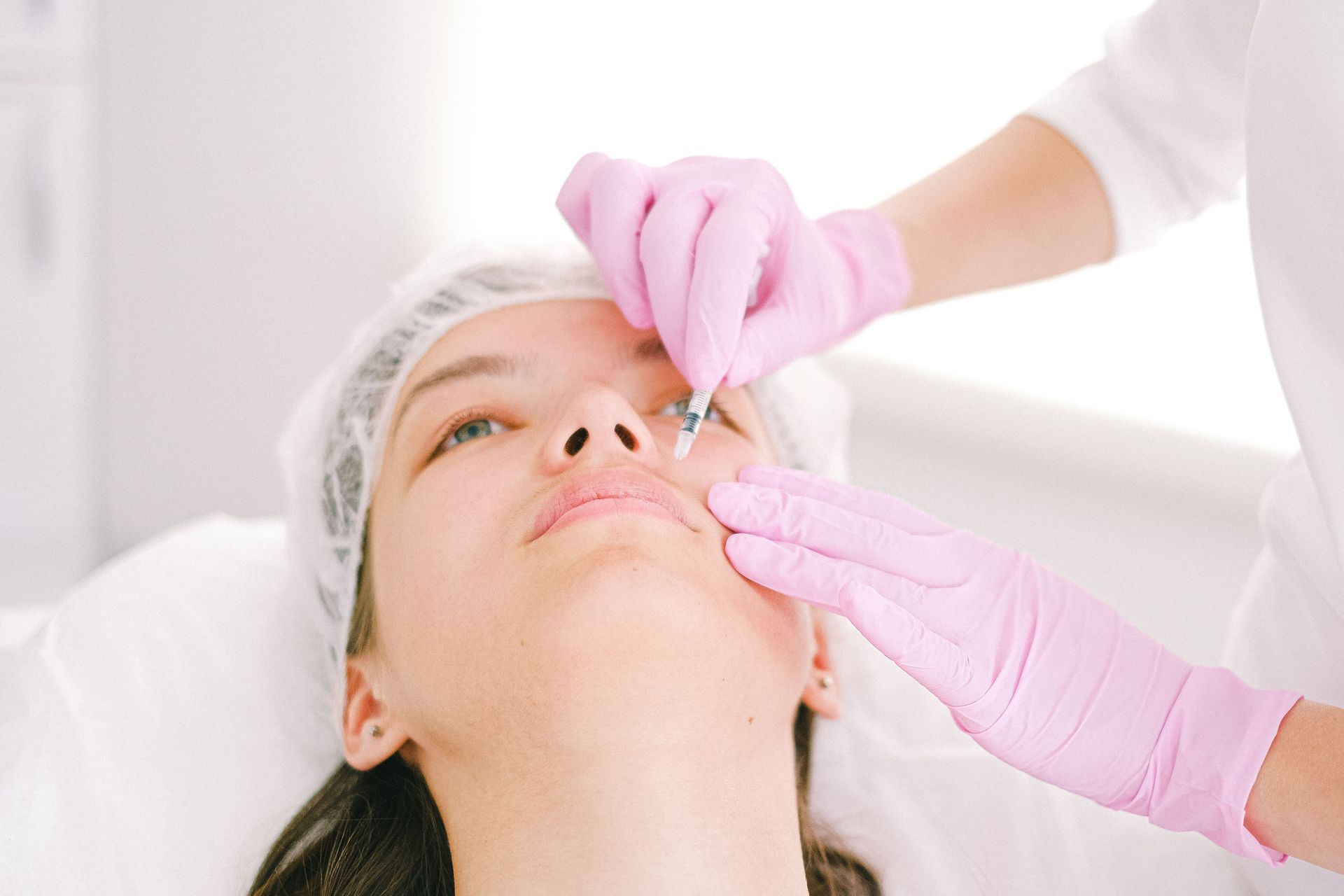
Movement is one of the biggest variables, and it is the reason lip filler rarely lasts as long as cheek filler. Your lips talk, eat, drink, and express emotion all day, and that constant motion speeds up how quickly the gel is metabolized. The cheeks and temples sit relatively still by comparison, so filler placed there tends to hold its shape longer. If you want a closer look at how lip enhancement settles and softens in those first two weeks, our breakdown of the
lip filler healing process covers the full timeline day by day.
Your metabolism and lifestyle
Patients with faster metabolisms break filler down more quickly, which is why a very active person who trains hard several times a week may notice results fading earlier than a more sedentary friend who had the same treatment. Sun exposure plays a role too, since accumulated ultraviolet damage degrades both your natural and your injected hyaluronic acid. Significant weight changes can shift how volume reads on the face, and smoking is consistently linked to faster collagen loss. None of this means you need to overhaul your life. It simply helps explain why your timeline is yours alone. Age factors in as well, because the same volume of filler tends to read more subtly on a face that has lost more of its own structural support, and a subtler starting point reaches the point of refresh a little sooner.
The amount used and who injects it
Under-filling an area to save on cost often backfires. A result that was barely there to begin with reads as gone within a few months, which sends patients back sooner than they expected. Placement depth matters as well. Filler positioned deeper against bone for structural support generally outlasts the same product placed superficially. This is where the skill of the injector becomes the quiet difference between a result that holds and one that disappears. You can read more about the credentials behind our team of injectors at SKIN MD.
What we tell our patients: The number on the box is a population average, not a promise about your face. We would rather set a realistic window during your consultation and let your own results guide the maintenance schedule than have you watching the calendar and wondering why month seven looks different from a brochure.
Your filler may outlast its visible result
Here is something that surprises even seasoned patients. The point at which a filler stops looking like it is doing anything is not always the point at which the material is gone. Imaging research has begun to separate the cosmetic effect from the physical persistence of the gel. A 2024 study published in Plastic and Reconstructive Surgery – Global Open used MRI to track hyaluronic acid in the mid-face and found filler still detectable in all 33 patients at least two years after injection, with traces visible in some patients many years later. The practical takeaway is not that you should treat less often. It is that an experienced injector accounts for what may still be present in the tissue, which is one more reason to build your treatment plan with a provider who keeps records of your history rather than starting from scratch each visit.
How to make your dermal filler last longer
You cannot freeze a result in place, but you can avoid the habits that shorten it and lean into the ones that protect it. We give every patient a printed before and aftercare guide at their appointment. Two points on it earn the most return for the least effort.
- Protect your skin from the sun. Daily broad-spectrum SPF does more for filler longevity than almost any product you can buy. Ultraviolet light breaks down hyaluronic acid, both the kind your body makes and the kind we inject, so consistent protection slows the fade.
- Time your maintenance before it disappears. A small touch-up while some product is still present tends to keep you looking consistent and often requires less filler over time than letting the area empty out completely and rebuilding from zero.
Beyond those two, the basics still apply. Stay hydrated, since hyaluronic acid draws water and benefits from it. Keep your skincare quality high. Hold off on intense heat such as saunas and hot yoga in the first couple of days after treatment, when the product is settling. None of this is dramatic, and that is the point. Steady, sensible care protects the investment you already made.
When should you come back for more?
Most lip patients return for a refresh somewhere between six and twelve months, while cheek and jawline patients often stretch to a year or beyond. Rather than circling a fixed date, we encourage you to watch the area itself. When you notice the contour softening or the volume looking less defined than it did, that is usually the moment to book. Coming in while a portion of the product remains lets us build on what is already there, which is gentler on your face and frequently on your budget. For patients spacing out larger treatments, our flexible payment plans can make a steady maintenance rhythm easier to keep.
What if you want to adjust the result early?
One of the reasons hyaluronic acid remains the most popular filler material is that it is adjustable. If you decide you want a change before the product has naturally faded, an enzyme called hyaluronidase can dissolve it, usually within a day or two. That safety net is part of why we favor hyaluronic acid for first-time patients and why we always start conservatively. It is far easier to add a little more at a follow-up than to wish you had asked for less. Patients who want a subtle lift to the upper lip without added volume sometimes pair their plan with a touch of
Botox in Dearborn, which relaxes the muscle rather than filling the tissue and follows its own three to four month rhythm.
Frequently asked questions
Do dermal fillers last longer the more times you get them?
For many patients, yes. Areas treated repeatedly often hold results a little longer over time, partly because of the collagen response that injections can encourage and partly because there may still be product present from earlier sessions. Many of our long-term patients find they need slightly less filler to maintain their look as the years go on.
Does filler in the cheeks really last longer than in the lips?
Generally it does. The cheeks move far less than the lips throughout the day, and reduced movement slows how quickly the body metabolizes the gel. Thicker, more structural products are also typically used in the cheeks, which adds to the difference.
Will my face look strange when the filler wears off?
No. Hyaluronic acid fillers fade gradually, so the change is slow and even rather than sudden. Your face simply returns toward its pre-treatment appearance over several months, which is why most people choose to maintain before they reach that point.
How soon will I see my final result?
Hyaluronic acid fillers show much of their effect right away, with the final look settling once swelling resolves over about two weeks. Sculptra is the exception. Because it works by building your own collagen, results appear gradually across a series of sessions.
Why does Sculptra last longer than a hyaluronic acid filler?
Sculptra does not stay in your tissue as a gel the way hyaluronic acid does. It acts as a signal that prompts your body to produce its own collagen, and that collagen becomes part of your living tissue. Because the result is built from something your body made rather than a product waiting to be absorbed, it tends to hold for up to two years. The trade-off is patience, since the volume develops over a few months instead of appearing the day of treatment.
Can I get filler if I have an event coming up?
Yes, as long as you give yourself room in the calendar. We suggest scheduling hyaluronic acid filler at least two weeks before a wedding, photo shoot, or other milestone so any swelling or bruising has time to resolve and the result has settled. If you are planning around Sculptra, start earlier, since its collagen-building effect needs several weeks to show.
The clearest way to learn how long filler will last on your face is to have us look at it. During a consultation at our Dearborn or Northville office, we assess your anatomy, talk through your goals, and give you a realistic projection for your specific case. Book a consultation with our team, or call us at 248-662-5544. We will take it from there.
References
Wollina, U., et al. (2024). Hyaluronic Acid Filler Longevity in the Mid-face: A Review of MRI Findings. Plastic and Reconstructive Surgery – Global Open. journals.lww.com/prsgo
Rzepniewski, P. T., et al. (2024). Longevity of hyaluronic acid dermal fillers – current state of knowledge. Przegląd Dermatologiczny / Dermatology Review, 111(1), 47–51. doi.org/10.5114/dr.2024.140797
Healthline. How Long Does Filler Last? Expert insights on duration by filler type and brand. healthline.com/health/how-long-does-filler-last