Everything You Need to Know Before Getting Lip Fillers for the First Time

Most first-time lip filler patients walk into our Dearborn office with a photo saved on their phone. Sometimes it shows a celebrity. Just as often it shows the patient ten years earlier, when their lips looked fuller without any help. Along with the photo come two worries we hear almost every week: will it hurt, and will people be able to tell?
Both questions have more reassuring answers than most people expect. Lip filler, known in clinical literature as lip augmentation, is a cosmetic procedure in which a hyaluronic acid gel is injected into the lips to add volume or refine their shape. It ranks among the most requested injectable treatments in the country, and the American Society of Plastic Surgeons recorded roughly 1.6 million hyaluronic acid lip augmentation procedures in 2024. A first appointment takes under an hour, and the change is visible before you leave. This guide covers what a first-timer should understand before booking, from choosing an injector to the two weeks after treatment.
Quick answer: Lip filler uses hyaluronic acid, a molecule your skin already produces, to add volume and definition to the lips. First-time patients usually receive between half a syringe and one full syringe, and the appointment takes about 30 to 60 minutes including numbing. Expect swelling for several days and a settled result at around two weeks. Results typically last six to twelve months, and the filler can be dissolved if you ever want to undo it.
What is lip filler and how does it work?
Lip filler is an injectable gel made from cross-linked hyaluronic acid. In its natural form, hyaluronic acid is a sugar molecule found throughout the skin, where it draws in water and keeps tissue cushioned. On its own it breaks down within days, so manufacturers link the molecules together into a smooth, cohesive gel that holds its place for months. Once injected, the gel binds water and gives the lips added volume and structure. Our lip filler in Dearborn comes from the Juvéderm and Restylane families, both FDA-approved and both offering formulas designed specifically for the lips.
Lip formulas are softer and more flexible than the gels used in the cheeks or along the jawline. The difference matters because the lips are in near-constant motion while you talk and eat, and a firm product would feel stiff and look unnatural in movement. Your injector selects a gel based on what you want to change. A lighter gel suits subtle hydration and fine lines along the edge of the lip, while a slightly more structured one holds shape better when the goal is a sharper outline or noticeable fullness.
Am I a good candidate for lip filler?
Most healthy adults who want fuller or more defined lips are good candidates. In practice, first-time patients tend to fall into two groups. Younger patients often have naturally thin lips or a top lip that looks small next to the bottom one, and they want more shape. Patients in their forties and older usually notice that their lips have thinned with age and that fine vertical lines have started forming above the upper lip.
A few situations call for waiting. We postpone treatment for patients who are pregnant or breastfeeding and for anyone with an active cold sore or infection near the mouth. A history of severe allergic reactions or a bleeding disorder calls for a careful conversation with your injector beforehand. If you have ever had cold sores, mention it when you book. Injections can trigger an outbreak, and a short course of antiviral medication taken ahead of time usually prevents one.
How do you choose the right injector for your first lip filler?
The injector shapes your result far more than the brand in the syringe. The lips sit over a network of small arteries, and safe technique depends on knowing where they run and how deep they lie. Equally important is an eye for proportion, so the lips stay in balance with the rest of the face. The U.S. Food and Drug Administration recommends that fillers be injected only by licensed providers trained in facial anatomy and encourages patients to ask about that training before treatment.
A good consultation feels like a conversation. Bring the photos you like and expect your injector to tell you honestly whether that look suits your anatomy. These questions are worth asking:
- Which product do you recommend for my goals, and why? The answer shows whether the plan is being tailored to you or pulled from a default.
- How much filler do you suggest for a first session? A conservative starting volume is a good sign, especially if you have never had injectables.
- What happens if I have a complication or dislike the result? Ask whether the office keeps hyaluronidase on hand and how quickly you can be seen.
- Can I see before and after photos of your own work? Look for lips that still look like they belong to the person in the photo.
At SKIN MD, every treatment plan is overseen by a medical team led by Dr. James Bazzi, MD. You can read about the training and experience behind our injectors before you book, and the lip gallery on our filler page shows the kind of natural results we aim for.
How much filler will you need for a first treatment?
Lip filler is measured in milliliters, and a standard syringe holds 1 mL, roughly one fifth of a teaspoon. First-time patients usually receive between 0.5 mL and 1 mL. People who expect a larger number are often surprised, but the lips are a small area, and a single syringe produces a visible change for most mouths.
Starting conservatively is our standard approach for a practical reason. Adding a little more at a follow-up visit is simple, while taking product away means dissolving it. Lip tissue also adapts gradually, so patients who want significant fullness usually get a smoother, more natural result by building over two sessions or more than by reaching for the final look in one visit.
What we tell our patients: Think of your first syringe as a starting point. We would much rather see you at your two-week follow-up wanting a touch more than have you leave with lips that feel foreign to you. Natural results come from careful placement and patience far more than from volume.
How should you prepare for your first lip filler appointment?
Most of the preparation happens in the two weeks before treatment. The table below shows what to do and when, along with the reason behind each step.
| When | What to do | Why it matters |
|---|---|---|
| Two weeks before | Book at least two weeks ahead of any wedding or photo shoot, and keep dental appointments out of the same window. | Lips need about two weeks to settle, and dental work near fresh injection sites raises the risk of infection. |
| One week before | Pause fish oil and over-the-counter pain relievers such as ibuprofen, but only with your prescriber’s approval. | These thin the blood and make bruising at the injection points more likely. |
| A few days before | Let your injector know about any history of cold sores. | An antiviral started in advance can prevent an outbreak triggered by the injections. |
| 24 hours before | Skip alcohol and drink plenty of water. | Alcohol widens blood vessels and increases bruising. |
| Day of treatment | Arrive with clean lips and no lipstick, and eat a light meal beforehand. | A clean surface lowers infection risk, and eating helps if needles make you lightheaded. |
Does getting lip filler hurt?
Lip filler causes brief discomfort that most patients describe as pressure with a few sharp pinches. The lips hold a dense concentration of nerve endings, so numbing is taken seriously. A topical anesthetic cream sits on the lips for 15 to 20 minutes before treatment, and most hyaluronic acid lip fillers are premixed with lidocaine, a local anesthetic that starts working within moments of the first injections. By the time your injector reaches the second side of the mouth, much of the area already feels numb.
For patients who feel anxious about needles, we offer PRO-NOX pain management in Dearborn, a patient-controlled nitrous oxide system. You inhale it as needed during the appointment, and its effect fades within minutes once you stop.
What happens during the appointment?
The visit begins with a review of your medical history and photographs of your lips from several angles, which serve as the baseline for judging your result later. Your injector then studies the anatomy of the mouth. The pink portion of the lip is called the vermilion, and the line where it meets the surrounding skin is the vermilion border. The peaked center of the upper lip is the Cupid’s bow. Injecting along the border sharpens the outline, while injecting into the body of the vermilion adds fullness, and most first treatments involve a measured amount of each.
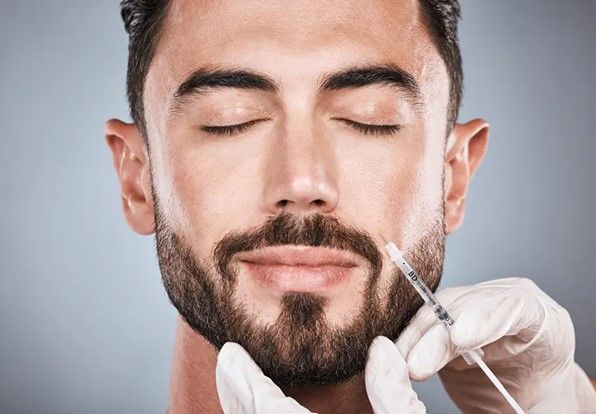
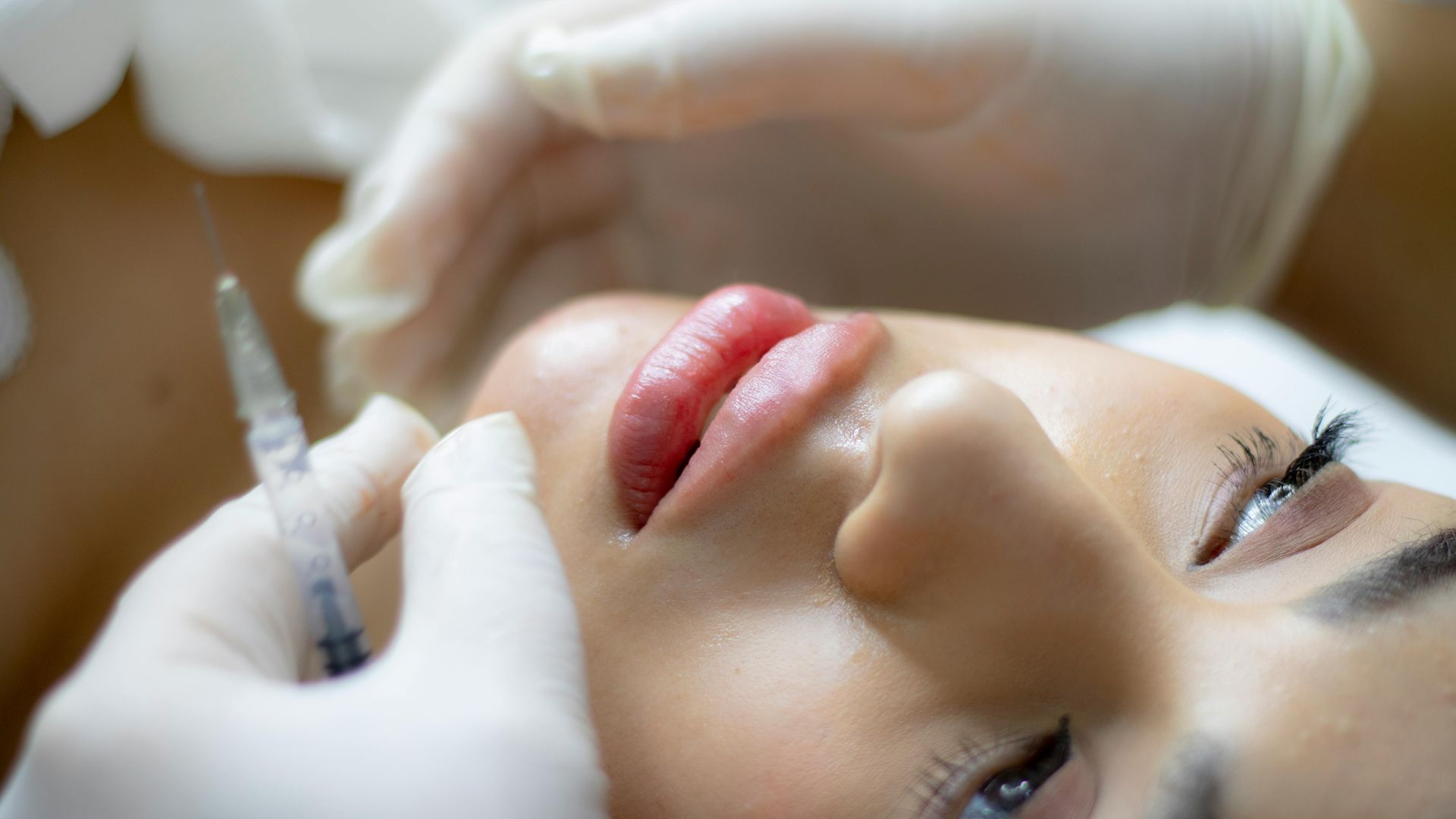
After numbing, the injections themselves take about 15 to 20 minutes. Product is placed with a fine needle or a blunt-tipped cannula, depending on the technique your injector prefers for each area, and it is gently molded as it goes in. You will check the result in a mirror before leaving, with an ice pack ready for the ride home.
What does recovery look like after your first lip filler?
Swelling is the defining feature of the first few days, and it surprises nearly every first-timer. Lips often look larger and a little uneven right after treatment. Swelling usually peaks on the second day and then fades steadily over the following week. Small bruises at the injection points are common and typically clear within seven to ten days. Our day-by-day guide to the lip filler healing process walks through each stage in detail.
For the first 48 hours, skip strenuous workouts and alcohol, since both can make swelling worse. Avoid drinking through a straw for several days as well, because repeated puckering puts pressure on filler that is still settling. Your complete instructions are in our before and aftercare guide. Your settled result appears at about two weeks, and that is when we see you for a follow-up to evaluate symmetry and decide together whether anything needs refining.
Is lip filler safe?
Lip filler has a long safety record when performed by a trained medical injector. Hyaluronic acid fillers have been used in the United States for more than two decades, and because the body already makes hyaluronic acid, allergic reactions are uncommon. Most side effects are mild and temporary, chiefly swelling and bruising that fade within days.
Reversibility is the feature first-time patients tend to value most. If a result looks uneven or you simply change your mind, an enzyme called hyaluronidase breaks the gel down, with most of the effect visible within a day or two. The same enzyme is the treatment for the rare but serious complication of vascular occlusion, in which filler blocks blood flow through a small artery. Prompt treatment matters, which is why we ask every patient to know the warning signs.
When to call SKIN MD right away at 248-662-5544:
- Pain that is severe or growing worse instead of improving
- White or mottled purple discoloration on the lips or nearby skin
- Blisters or a spreading rash near the injection sites
- Fever or chills in the days after treatment
Should you start with lip filler or a lip flip?
A lip flip uses a few units of a wrinkle relaxer placed along the upper lip border. It relaxes the muscle that curls the upper lip inward, so the lip rolls slightly outward and shows more of its pink surface. Lip filler adds actual volume. Patients who already have reasonably full lips and want a little more show on top often start with a lip flip with Botox in Dearborn, while those looking for fullness or better symmetry are better served by filler. The two combine well, and our comparison of dermal fillers vs Botox explains the broader difference between the two families of injectables.
How long do lip filler results last?
Lip filler typically lasts six to twelve months. The lips are among the most mobile areas of the face, and constant movement breaks hyaluronic acid down faster than in quieter areas such as the cheeks. Individual metabolism and the specific product chosen also influence longevity. Many long-term patients find that later treatments hold longer than their first and that they need less product to maintain the shape they like. Our guide on how long dermal fillers last compares timelines across treatment areas.
How much does lip filler cost?
The price of lip filler depends mainly on how much product you need and which formula suits your goals. For most first-time patients, a single syringe or less is enough, which keeps the first visit more affordable than many people assume. You will receive an exact quote during your consultation, and our flexible payment plans make it easier to plan for maintenance once you find a look you love.
Lip filler at SKIN MD in Dearborn and Northville
SKIN MD offers lip filler at our Dearborn office and our Northville med spa location, with every plan built around your anatomy and your goals. Our injectors start conservatively with first-time patients and see you back at two weeks to make sure the result landed where you wanted it.
Ready for your first lip filler appointment? Schedule a consultation at our Dearborn or Northville office, or call us at 248-662-5544. We will talk through your goals and show you what a conservative first session can realistically achieve.
Frequently asked questions
Will my lips look fake after my first lip filler?
Well-placed filler in a conservative amount looks like a fuller version of your own lips. An overdone appearance usually comes from too much product at once or placement that ignores the natural shape of the mouth. Starting with half a syringe to one syringe keeps the result in proportion.
How far in advance should I get lip filler before an event?
Plan for at least two weeks, and ideally closer to three. That window allows swelling and any bruising to resolve fully and leaves time for a small touch-up if your injector recommends one.
When can I wear lipstick after lip filler?
Wait at least 24 hours before applying lipstick or gloss directly over the injection sites. Fresh needle points are small openings in the skin, and keeping products off them for a day lowers the chance of infection.
Is it normal for my lips to look uneven after filler?
Yes, during the first week. Swelling rarely develops evenly, so one side can look larger for several days. Your injector judges symmetry at the two-week follow-up, once the swelling has fully resolved.
Is it normal to feel small lumps after lip filler?
Small firm spots are common in the first week or two and usually soften as the gel settles and integrates. Avoid massaging them unless your injector specifically tells you to, and mention any lump that persists past two weeks at your follow-up.
References
American Society of Plastic Surgeons. (2025). 2024 ASPS Procedural Statistics Release: Cosmetic Minimally Invasive Procedure Trends. plasticsurgery.org/documents/news/statistics/2024/minimally-invasive-procedure-trends-2024.pdf
Luthra, A. (2015). Shaping lips with fillers. Journal of Cutaneous and Aesthetic Surgery, 8(3), 139-142. pmc.ncbi.nlm.nih.gov/articles/PMC4645142
U.S. Food and Drug Administration. Dermal fillers (soft tissue fillers).
fda.gov/medical-devices/aesthetic-cosmetic-devices/dermal-fillers-soft-tissue-fillers