The Glow Getter: Why the Lutronic Ultra Laser is Michigan’s Best Kept Secret for Pigmentation
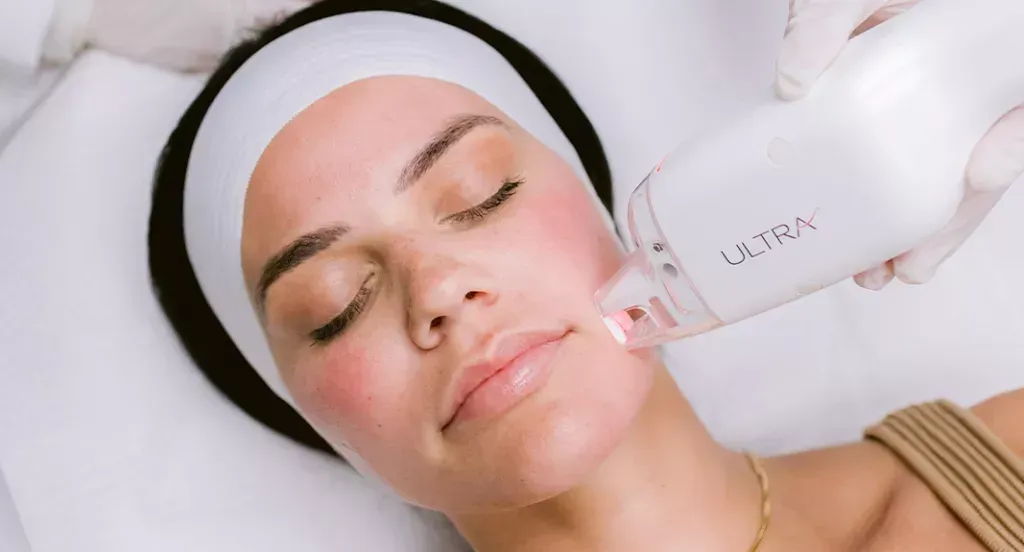
Let’s be honest: most of us want the results of a high-intensity laser, but we absolutely dread the red and raw recovery that usually comes with it. We want the sunspots gone and the melasma faded, but we can’t exactly take a week off work to hide in a dark room while our skin heals. If you’ve been sitting on the fence about laser resurfacing because of the downtime, it’s time you met the Lutronic Ultra.


At SkinMD MedSpa in Dearborn, MI, we often call this our glow getter treatment. It’s a sophisticated Thulium laser, often referred to as LaseMD, that bridges the gap between a relaxing facial and an aggressive surgical laser. It’s the secret weapon for Michigan residents looking to hit the undo button on years of sun damage and seasonal dullness.


Understanding How the Thulium Laser Rebuilds Your Skin

Most traditional resurfacing lasers are ablative, meaning they remove the top layer of your skin to force it to regrow. While effective, it’s a heavy commitment that involves significant peeling and discomfort. The Lutronic Ultra is different because it is a non-ablative fractional laser.


Instead of burning the surface, it uses targeted energy to create thousands of microscopic channels deep within the tissue. This triggers your body’s natural healing response and kickstarts massive collagen production without destroying the surface layer. Because the laser is so fast and precise, it treats only a fraction of the skin at a time, leaving the surrounding tissue intact. You get the deep-tissue benefits of a powerful laser, but your skin stays protected, meaning your recovery is measured in hours rather than days.


Identifying the Best Candidates for Laser Pigment Correction

If you look in the mirror and feel like your skin has lost its light, or if you’re frustrated by specific patches of pigment, this laser was designed for you. It is particularly effective for several different skin struggles that we see frequently in our Dearborn office:

  • Sun Damage and Age Spots: If those summer days at the lake left behind brown reminders on your cheeks and forehead, the Ultra specifically targets that excess melanin.
  • Melasma Management: Many lasers produce too much heat for melasma and can actually make it worse. The Ultra is gentle and fast enough to treat hormonal pigmentation safely without the risk of rebounding.
  • The Winter Skin Slump: Michigan winters can leave skin looking grey, sallow, and dehydrated. This laser polishes the surface to restore that glass skin radiance that usually requires a heavy makeup routine to achieve.
  • Fine Lines and Prevention: Even if you don't have heavy pigment, the collagen boost from the Ultra helps soften the early signs of aging and keeps the skin barrier resilient.


Fast Treatment and Minimal Downtime for Busy Schedules

The biggest hurdle for our patients is usually a packed schedule. The beauty of the Lutronic Ultra is its sheer efficiency. A full face treatment usually takes about 20 minutes from start to finish. You might leave the office feeling a little warm, almost like a mild sunburn, and perhaps a bit pink for the rest of the afternoon. By the next morning, you can typically apply your normal skincare, put on your makeup, and go about your day.


Over the next week, the damaged pigment will subtly flake away. This exfoliation is often so fine that you won't even notice it happening—it just feels like your skin is slightly textured for a day or two. As that old, damaged skin sheds, it reveals the fresh, bright, and even-toned complexion underneath. It’s the perfect way to reset your skin without putting your life on hold.


Your Path to Glowing Skin in Dearborn

You don’t have to settle for a dull complexion just because you’re too busy for a week of recovery. Whether you’re prepping for a big event like a wedding or just want to feel more confident without a heavy layer of foundation, the Lutronic Ultra is the gold standard for modern resurfacing. Our team specializes in customizing the intensity of the laser to match your specific goals and your skin's tolerance.


  • Ready to see why this is the favorite treatment of the SkinMD team? Visit our Lutronic Ultra service page to learn more about the science behind the glow, or call us at (248) 662-5544 to schedule your consultation at our Dearborn office.
February 5, 2026
It usually starts with the hair. Most men come into SkinMD because they’ve noticed a receding hairline or a thinning crown and realized they aren't ready to let go of their youthful edge. But once we’ve addressed the hair with an FUE Hair Transplant , many of our patients realize that their hair was only one part of the equation. If you’ve restored your hair but your face still looks tired, haggard, or soft in the jaw, you’re only halfway to the finish line. Modern aesthetics for men isn't about looking pretty; it’s about looking capable, energized, and sharp. It’s about ensuring that the face you see in the mirror matches the energy you still feel inside. Improving Professional Perception by Softening Facial Fatigue In the professional world, appearance matters more than we like to admit. Deep forehead furrows or those 11 lines between the brows don’t just make you look older—they make you look stressed, angry, or permanently exhausted. When you’re leading a meeting, closing a deal, or interviewing for a new position, you want to look like the person who has everything under control. This is where Brotox, or Botox for men, comes in. The goal of this treatment is never to freeze your face into an expressionless mask. Instead, we use precisely measured doses to soften those deep ruts while maintaining enough movement to look natural. We focus on the areas that make you look tired, such as the crow's feet and the heavy lines on the forehead. It’s the difference between looking like you have had work done and looking like you just had the best eight hours of sleep of your life. It’s a subtle shift that changes how people perceive your mood and your vitality. Sculpting a Masculine Profile with Jawline and Chin Contouring While women often seek fillers for high cheekbones or plump lips, men have a different anatomical goal: a strong, defined jawline. A chiseled jaw is the universal hallmark of masculinity and physical fitness. Unfortunately, as we age, we naturally lose bone density and our fat pads shift, leading to a soft jaw or the beginning of jowls. This can make even a fit man look like he carries extra weight in his neck. Using structural fillers like Juvederm Voluma, we can literally sculpt a stronger chin and a sharper mandibular angle. By reinforcing the bone structure of the jawline, we create that sought-after superhero profile. This isn't just about vanity; it’s about restoring the masculine proportions that time has taken away. It’s a 30-minute procedure with zero downtime, providing an immediate improvement that can last up to two years. It defines the transition between your face and your neck, which is often the first place to show signs of aging in men. A Tailored Approach to Male Aesthetic Maintenance At SkinMD MedSpa in Dearborn, we understand that men have different skin and different aesthetic goals. Male skin is generally thicker, more vascular, and has different muscle density than female skin. You want results that are effective but discreet. You want to walk into the office on Monday morning and have people think you look great, without them being able to put their finger on exactly why. If you’ve already taken the leap to restore your hair, don't stop there. Frame that new hairline with a face that looks just as rejuvenated. We offer a private, professional environment where we can discuss your goals and build a maintenance plan that fits your lifestyle. From laser skin polishing to subtle injectables, we help you stay at the top of your game. Ready to sharpen your look? Call us at (248) 662-5544 to book a consultation at our Dearborn, MI office. Let’s talk about a plan that fits your goals and keeps you looking as sharp as you feel.
January 14, 2026
For many men and women, hair loss isn’t just a cosmetic annoyance, it is a matter of confidence, identity, and self-image. Whether you are seeing the first signs of a receding hairline or have been managing significant thinning for years, the search for a permanent solution often leads to one answer: Hair Transplantation. But not all hair transplants are created equal. At SkinMD Michigan, serving Dearborn and the greater Detroit area, we specialize in the modern gold standard of hair restoration: Follicular Unit Extraction (FUE). This guide will serve as your comprehensive resource, breaking down everything you need to know about the procedure, the science, the cost, and the recovery. What is FUE Hair Restoration? Follicular Unit Extraction (FUE) is a minimally invasive hair transplant technique where individual hair follicles are extracted from a donor area (typically the back or sides of the scalp) and implanted into thinning or balding areas. Unlike traditional "strip" surgeries, FUE uses a precision micro-punch tool to harvest grafts one by one, leaving no linear scar and ensuring a natural-looking result with minimal downtime. The Evolution of Hair Transplants: FUE vs. FUT To understand why FUE is the preferred choice for patients in Michigan, it is important to understand what it replaced. For years, the industry standard was FUT (Follicular Unit Transplantation), often called the "strip method." This involved surgically removing a long strip of skin from the back of the head. While effective at moving hair, it came with significant downsides: A permanent, visible linear scar across the back of the head. A longer, more painful recovery period. The inability to wear short hairstyles without revealing the surgery. The FUE Difference FUE changed the game by eliminating the scalpel. Instead of removing a strip of skin, we remove the follicular unit—the group of 1-4 hairs as they grow naturally—directly from the scalp. Why this matters for you: Stealth Results: Because there is no linear scar, you have the freedom to wear your hair short or shaved in the future. Reduced Pain: Most patients report minimal discomfort post-procedure compared to the tension and stitching of FUT. Precision: The surgeon can select the strongest, healthiest grafts for the best possible density. The Science: How the Procedure Works Hair transplantation is a marriage of biology and engineering. It relies on the concept of "Donor Dominance." The hair on the back and sides of your head is genetically programmed to be resistant to Dihydrotestosterone (DHT), the hormone responsible for male pattern baldness. When we move these hairs to the front or top of your head, they retain that genetic resistance and will grow for a lifetime. At SkinMD, we use advanced technology to ensure the survival rate of these grafts is maximized. The Three Phases of FUE Harvesting: Using a specialized micro-punch (less than 1mm in diameter), the physician isolates and extracts the graft. Preparation: The extracted grafts are cleaned, sorted by size (1 hair, 2 hairs, 3 hairs), and kept in a nutrient-rich solution to keep them alive outside the body. Implantation: Tiny incisions are made in the recipient area. This is the "artistic" part of the surgery. The angle, depth, and direction of these incisions determine how natural your hairline will look. Deep Dive : Ideally, you want to understand the technology that makes this possible. We break down the biological mechanics in our detailed article: The Science Behind Hair Transplants: Understanding FUE. Am I a Candidate? Who Benefits Most from FUE Not everyone is a candidate for a hair transplant. Success depends on your age, the quality of your donor hair, and the stability of your hair loss. The Ideal Candidate typically has: Stabilized Hair Loss: If you are very young (early 20s) and your hair loss is rapidly progressing, we may recommend medical management first to stabilize the loss. Sufficient Donor Hair: You must have enough healthy hair on the back/sides of your head to cover the thinning areas. Realistic Expectations: Transplants restore density and frames the face, but they do not reproduce the density you had at age 16. Why Men in Michigan Choose SkinMD: There is a trend where men are seeking restoration earlier. They are not waiting until they are completely bald. By addressing a receding hairline early via FUE, they can maintain a youthful appearance and professional edge without anyone knowing they "had work done." Read More: Is FUE right for your specific hair loss pattern? Discover why this is the top choice for our male patients in our blog: Men’s Hair Restoration: Why More Men Are Choosing FUE. The Procedure Day: A Step-by-Step Experience Anxiety often comes from the unknown. To put your mind at ease, here is exactly what a typical day looks like at SkinMD Michigan for an FUE procedure. Arrival and Design You arrive at our clinic, and we take pre-procedure photos. The most critical step happens now: The Hairline Design. Dr. Bazzi and the team will draw your new hairline directly on your scalp. We adjust this until you are 100% satisfied. We look at your facial symmetry and age to ensure the design looks appropriate and natural. Extraction You will be given local anesthesia to numb the donor area. This is usually the only time you feel a slight pinch. You lie face down (comfortably) while the team extracts the grafts. Many patients listen to music or nap during this time. Implantation You will sit up or recline for the implantation phase. Departure The procedure typically takes 6 to 8 hours depending on the number of grafts. You will walk out with detailed aftercare instructions and a small bandage on the donor area. You will need a ride home due to the mild sedatives we may use for relaxation. Recovery Timeline: What to Expect After FUE One of the biggest advantages of FUE is the rapid recovery. However, patience is required for the growth phase. Days 1–3 (Healing): Your scalp may be slightly tender. The recipient area will have tiny red scabs. Swelling may occur on the forehead, which typically resolves in a few days. Day 7 (Scab Removal): By now, the tiny scabs will begin to wash away in the shower, revealing a clean, short haircut appearance. Weeks 2–4 This is the part no one warns you about! The transplanted hairs will shed and fall out. Do not panic. This is called "shock loss." The hair shaft falls out, but the living follicle remains safely under the skin, resting. Months 3–4 (New Growth): You will see thin, fine hairs beginning to poke through the scalp. Months 6–9 (Thickening): The hair becomes thicker, darker, and longer. You will see about 70-80% of your result. Month 12 (Final Result): Welcome to your new hair. The result is fully mature, and you can cut, style, and treat it exactly like the rest of your hair. Maximizing Your Results: The "Stacking" Strategy Surgery restores the hair, but biology keeps it there. To protect your investment and ensure the highest graft survival rate, we often recommend "stacking" treatments. PRF (Platelet-Rich Fibrin) We draw a small amount of your blood, spin it to concentrate the healing platelets and fibrin, and inject it into the scalp during surgery. Why we do it: PRF acts as a "fertilizer" for the newly planted follicles, increasing oxygen and blood flow to the area. This can speed up healing and improve the thickness of the final result. Learn how we use your body’s own healing power to accelerate results on our page: Hair Restoration with PRF. Frequently Asked Questions (FAQ) Q: Is the hair transplant permanent? A: Yes. The transplanted hair is taken from the "safe zone" on the back of your head, which is genetically resistant to balding. It will continue to grow for the rest of your life. Q: Will it look like "plugs"? A : No. The "pluggy" look from the 80s and 90s was caused by transplanting large clumps of hair. FUE moves individual follicles (1-3 hairs), allowing us to create a soft, feathered hairline that looks completely natural. Q: When can I go back to work? A: Most patients return to desk jobs within 3 to 5 days. If your job involves heavy lifting or wearing a hard hat, you may need to wait 10 to 14 days. Q: Does the procedure hurt? A: The procedure is performed under local anesthesia. Once the scalp is numb, you will not feel pain. Most patients report only mild discomfort during the recovery week, which is easily managed with over-the-counter pain relievers. Ready to Restore Your Confidence? Hair loss is progressive—but it is also treatable. The sooner you act, the more donor hair you have available to preserve. At SkinMD Michigan, we combine medical expertise with artistic vision to give you results that don't just look good—they look like you. Take the Next Step: Schedule your comprehensive consultation with our team in Dearborn today. We will assess your hair loss, calculate your graft needs, and build a customized plan for your restoration.
January 12, 2026
What is BioRePeel? BioRePeel is an innovative, no-peel chemical peel that rejuvenates skin without the heavy peeling often associated with traditional peels. At Skin MD Michigan in Dearborn, BioRePeel helps patients achieve glowing skin with minimal downtime. How does BioRePeel work? This treatment uses a blend of acids, amino acids, and vitamins to: Exfoliate damaged skin cells Stimulate collagen production Brighten pigmentation Smooth texture and fine lines