The Ultimate Guide to FUE Hair Transplants in Michigan: Procedure, Recovery, and Results
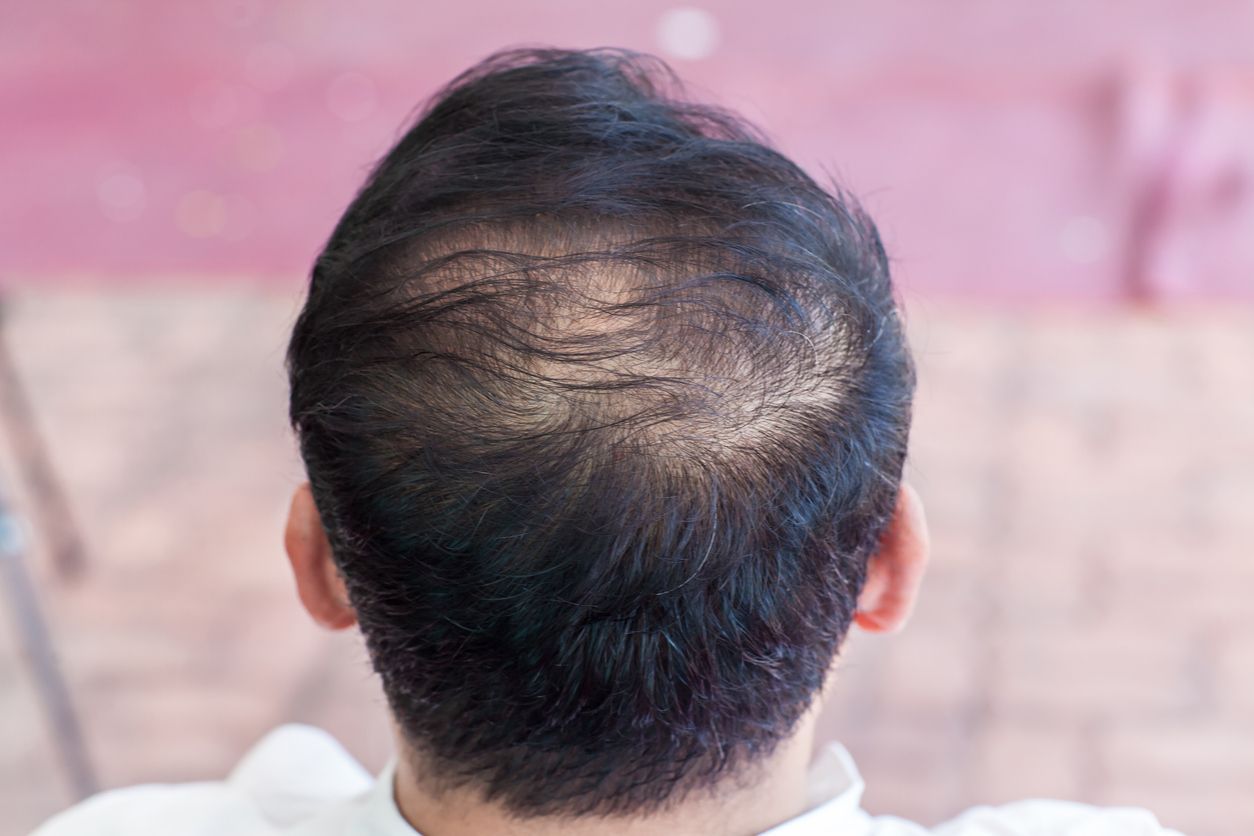
For many men and women, hair loss isn’t just a cosmetic annoyance, it is a matter of confidence, identity, and self-image. Whether you are seeing the first signs of a receding hairline or have been managing significant thinning for years, the search for a permanent solution often leads to one answer: Hair Transplantation.
But not all hair transplants are created equal.
At SkinMD Michigan, serving Dearborn and the greater Detroit area, we specialize in the modern gold standard of hair restoration: Follicular Unit Extraction (FUE). This guide will serve as your comprehensive resource, breaking down everything you need to know about the procedure, the science, the cost, and the recovery.
What is FUE Hair Restoration?
Follicular Unit Extraction (FUE) is a minimally invasive hair transplant technique where individual hair follicles are extracted from a donor area (typically the back or sides of the scalp) and implanted into thinning or balding areas. Unlike traditional "strip" surgeries, FUE uses a precision micro-punch tool to harvest grafts one by one, leaving no linear scar and ensuring a natural-looking result with minimal downtime.
The Evolution of Hair Transplants: FUE vs. FUT
To understand why FUE is the preferred choice for patients in Michigan, it is important to understand what it replaced.
For years, the industry standard was FUT (Follicular Unit Transplantation), often called the "strip method." This involved surgically removing a long strip of skin from the back of the head. While effective at moving hair, it came with significant downsides:
- A permanent, visible linear scar across the back of the head.
- A longer, more painful recovery period.
- The inability to wear short hairstyles without revealing the surgery.
The FUE Difference FUE changed the game by eliminating the scalpel. Instead of removing a strip of skin, we remove the follicular unit—the group of 1-4 hairs as they grow naturally—directly from the scalp.
Why this matters for you:
- Stealth Results: Because there is no linear scar, you have the freedom to wear your hair short or shaved in the future.
- Reduced Pain: Most patients report minimal discomfort post-procedure compared to the tension and stitching of FUT.
- Precision: The surgeon can select the strongest, healthiest grafts for the best possible density.
The Science: How the Procedure Works
Hair transplantation is a marriage of biology and engineering. It relies on the concept of "Donor Dominance." The hair on the back and sides of your head is genetically programmed to be resistant to Dihydrotestosterone (DHT), the hormone responsible for male pattern baldness. When we move these hairs to the front or top of your head, they retain that genetic resistance and will grow for a lifetime.
At SkinMD, we use advanced technology to ensure the survival rate of these grafts is maximized.
The Three Phases of FUE
- Harvesting: Using a specialized micro-punch (less than 1mm in diameter), the physician isolates and extracts the graft.
- Preparation: The extracted grafts are cleaned, sorted by size (1 hair, 2 hairs, 3 hairs), and kept in a nutrient-rich solution to keep them alive outside the body.
- Implantation: Tiny incisions are made in the recipient area. This is the "artistic" part of the surgery. The angle, depth, and direction of these incisions determine how natural your hairline will look.
Deep Dive: Ideally, you want to understand the technology that makes this possible. We break down the biological mechanics in our detailed article: The Science Behind Hair Transplants: Understanding FUE.
Am I a Candidate? Who Benefits Most from FUE
Not everyone is a candidate for a hair transplant. Success depends on your age, the quality of your donor hair, and the stability of your hair loss.
The Ideal Candidate typically has:
- Stabilized Hair Loss: If you are very young (early 20s) and your hair loss is rapidly progressing, we may recommend medical management first to stabilize the loss.
- Sufficient Donor Hair: You must have enough healthy hair on the back/sides of your head to cover the thinning areas.
- Realistic Expectations: Transplants restore density and frames the face, but they do not reproduce the density you had at age 16.
Why Men in Michigan Choose SkinMD: There is a trend where men are seeking restoration earlier. They are not waiting until they are completely bald. By addressing a receding hairline early via FUE, they can maintain a youthful appearance and professional edge without anyone knowing they "had work done."
Read More: Is FUE right for your specific hair loss pattern? Discover why this is the top choice for our male patients in our blog: Men’s Hair Restoration: Why More Men Are Choosing FUE.
The Procedure Day: A Step-by-Step Experience
Anxiety often comes from the unknown. To put your mind at ease, here is exactly what a typical day looks like at SkinMD Michigan for an FUE procedure.
Arrival and Design
- You arrive at our clinic, and we take pre-procedure photos.
- The most critical step happens now: The Hairline Design. Dr. Bazzi and the team will draw your new hairline directly on your scalp. We adjust this until you are 100% satisfied. We look at your facial symmetry and age to ensure the design looks appropriate and natural.
Extraction
- You will be given local anesthesia to numb the donor area. This is usually the only time you feel a slight pinch.
- You lie face down (comfortably) while the team extracts the grafts. Many patients listen to music or nap during this time.
- Implantation
- You will sit up or recline for the implantation phase.
Departure
- The procedure typically takes 6 to 8 hours depending on the number of grafts.
- You will walk out with detailed aftercare instructions and a small bandage on the donor area. You will need a ride home due to the mild sedatives we may use for relaxation.
Recovery Timeline: What to Expect After FUE
One of the biggest advantages of FUE is the rapid recovery. However, patience is required for the growth phase.
- Days 1–3 (Healing): Your scalp may be slightly tender. The recipient area will have tiny red scabs. Swelling may occur on the forehead, which typically resolves in a few days.
- Day 7 (Scab Removal): By now, the tiny scabs will begin to wash away in the shower, revealing a clean, short haircut appearance.
- Weeks 2–4 This is the part no one warns you about! The transplanted hairs will shed and fall out. Do not panic. This is called "shock loss." The hair shaft falls out, but the living follicle remains safely under the skin, resting.
- Months 3–4 (New Growth): You will see thin, fine hairs beginning to poke through the scalp.
- Months 6–9 (Thickening): The hair becomes thicker, darker, and longer. You will see about 70-80% of your result.
- Month 12 (Final Result): Welcome to your new hair. The result is fully mature, and you can cut, style, and treat it exactly like the rest of your hair.
Maximizing Your Results: The "Stacking" Strategy
Surgery restores the hair, but biology keeps it there. To protect your investment and ensure the highest graft survival rate, we often recommend "stacking" treatments.
PRF (Platelet-Rich Fibrin) We draw a small amount of your blood, spin it to concentrate the healing platelets and fibrin, and inject it into the scalp during surgery.
Why we do it: PRF acts as a "fertilizer" for the newly planted follicles, increasing oxygen and blood flow to the area. This can speed up healing and improve the thickness of the final result.
Learn how we use your body’s own healing power to accelerate results on our page: Hair Restoration with PRF.
Frequently Asked Questions (FAQ)
Q: Is the hair transplant permanent?
A: Yes. The transplanted hair is taken from the "safe zone" on the back of your head, which is genetically resistant to balding. It will continue to grow for the rest of your life.
Q: Will it look like "plugs"?
A: No. The "pluggy" look from the 80s and 90s was caused by transplanting large clumps of hair. FUE moves individual follicles (1-3 hairs), allowing us to create a soft, feathered hairline that looks completely natural.
Q: When can I go back to work?
A: Most patients return to desk jobs within 3 to 5 days. If your job involves heavy lifting or wearing a hard hat, you may need to wait 10 to 14 days.
Q: Does the procedure hurt?
A: The procedure is performed under local anesthesia. Once the scalp is numb, you will not feel pain. Most patients report only mild discomfort during the recovery week, which is easily managed with over-the-counter pain relievers.
Ready to Restore Your Confidence?
Hair loss is progressive—but it is also treatable. The sooner you act, the more donor hair you have available to preserve.
At SkinMD Michigan, we combine medical expertise with artistic vision to give you results that don't just look good—they look like you.
Take the Next Step: Schedule your comprehensive consultation with our team in Dearborn today. We will assess your hair loss, calculate your graft needs, and build a customized plan for your restoration.